When planning a metal building, most people focus on size, insulation, doors, and layout. Ventilation is often overlooked, but it plays a major role in how comfortable and efficient the building will be throughout the year.
Without proper airflow, heat and moisture can become trapped inside the structure. This can create uncomfortable working conditions, increase humidity levels, and contribute to condensation on metal surfaces. Over time, excess moisture may affect tools, equipment, and other stored items.
Natural Ventilation Options
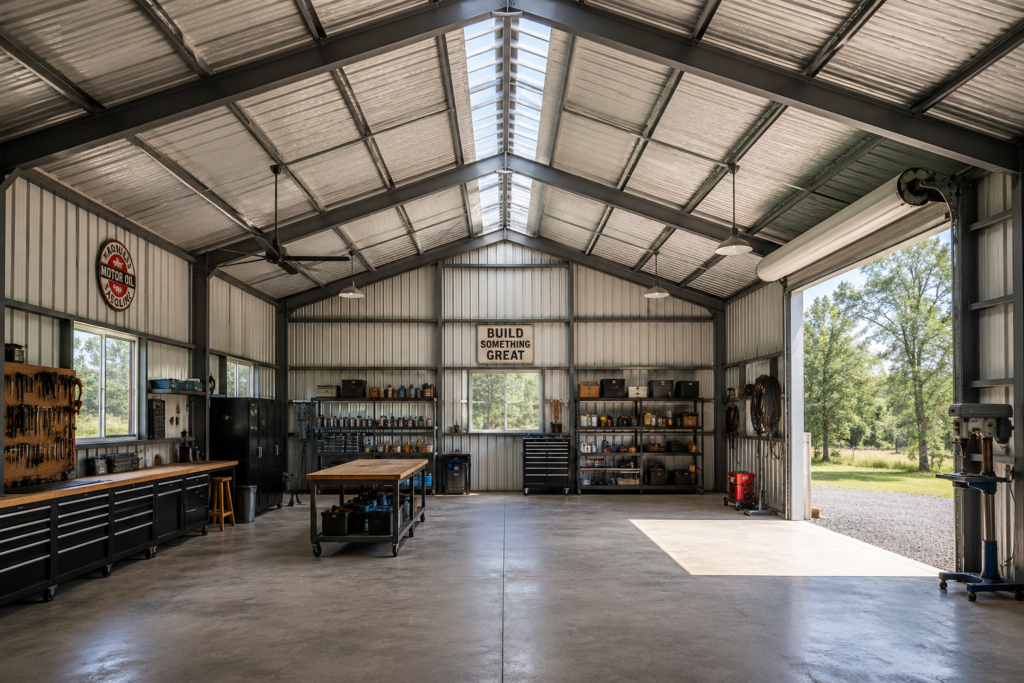
One of the most effective ways to improve airflow is through ridge vents. Installed along the peak of the roof, ridge vents allow rising warm air to escape naturally. When paired with wall vents, fresh air can enter the building while warm air exits, creating a continuous flow of air.
This type of passive ventilation works well for many storage buildings, garages, workshops, and agricultural structures because it helps regulate temperatures without increasing energy costs.
Mechanical Ventilation Systems
Larger buildings or spaces that generate heat, dust, or fumes may benefit from powered ventilation systems. Exhaust fans and intake fans help move stale air out while bringing fresh air in. This is especially useful in workshops, automotive bays, and equipment storage facilities where airflow requirements are greater.
Reducing Condensation and Moisture
Condensation is a common concern in metal buildings. When warm air meets cooler steel surfaces, moisture can form. Good ventilation helps control humidity levels and reduces the risk of rust, mildew, and other moisture-related problems.
Ventilation becomes even more effective when combined with proper insulation. Together, they help create a more stable interior environment while protecting the building and its contents.
Planning Ahead Matters
Climate, building size, and intended use should all influence ventilation decisions. A storage building may require only basic airflow, while a workshop or agricultural building may need a more advanced system.
By including ventilation in the initial design, property owners can improve comfort, protect valuable equipment, and help ensure their metal building performs well for years to come.